
UT_POLE — UT B-scan pole scanner for storage tanks
Three tanks a day, with two people, from the ground.
No scaffolding, no cherry picker, no rope access. 300 m of encoded B-scan per day up to 16 m high, the raw A-scan signal fully preserved, and an API 653 compliant thickness report generated before the crew leaves the tank.
Figures observed in a standard configuration. Depending on tank dimensions, daily output is frequently higher.
What you hand over to your client
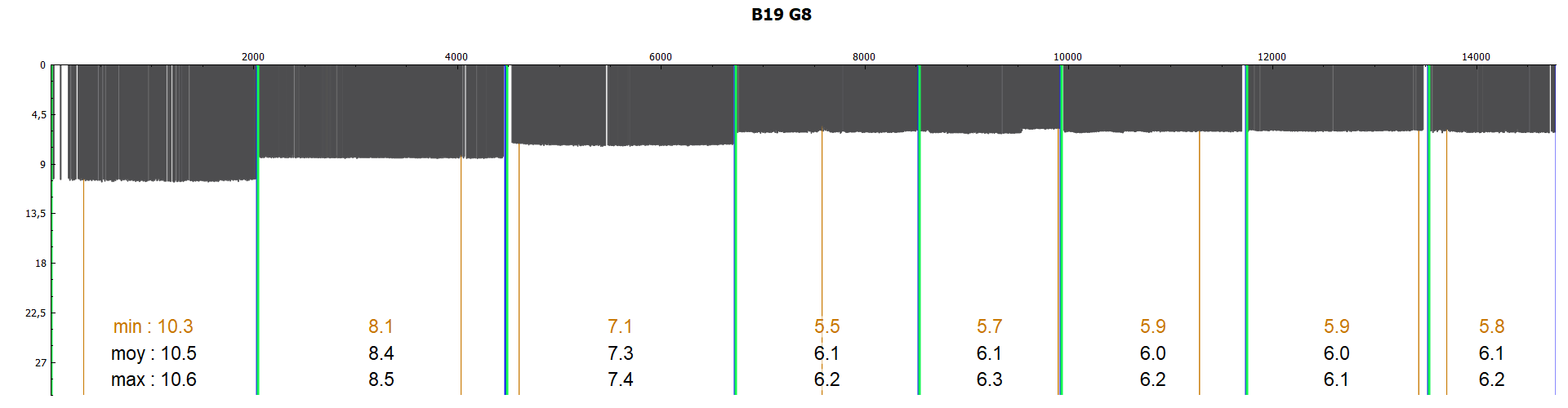
A continuous, encoded, positioned B-scan line.
A thickness profile recorded continuously, with an encoder step adjustable down to 1 reading per millimetre. Localised losses show up instead of being inferred from a grid of points.
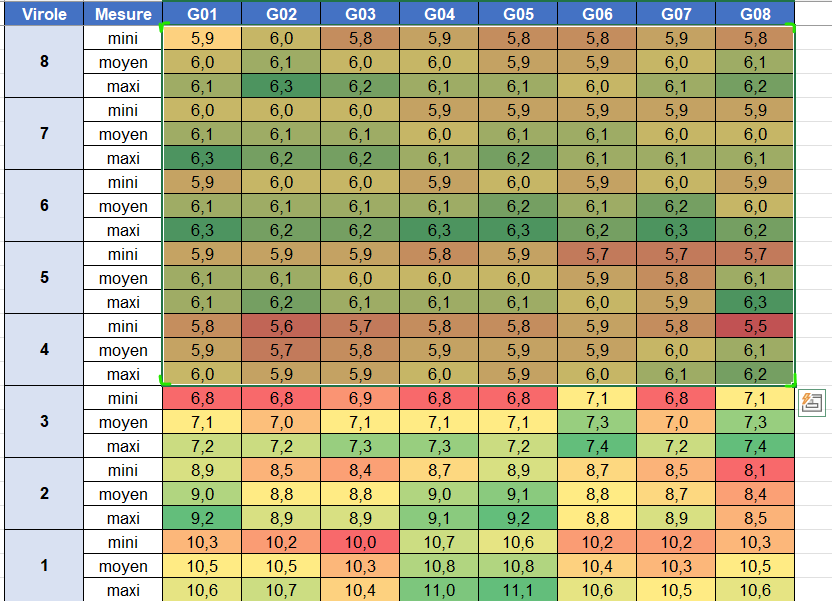
A colour-coded map.
Spot readings can be presented as a coloured point cloud — green, amber, red — which immediately reveals degraded areas and their extent. Alongside the B-scan profile, it is the format an operator or a non-specialist decision-maker reads fastest.
A report generated directly on site.
B-scan maps, weld positions, minimum, average and maximum thickness per shell course, position of the minimum, sizing of losses. The analysis software cuts generation time by around 70%.
On an ultrasonic chain compliant with ISO 16831.
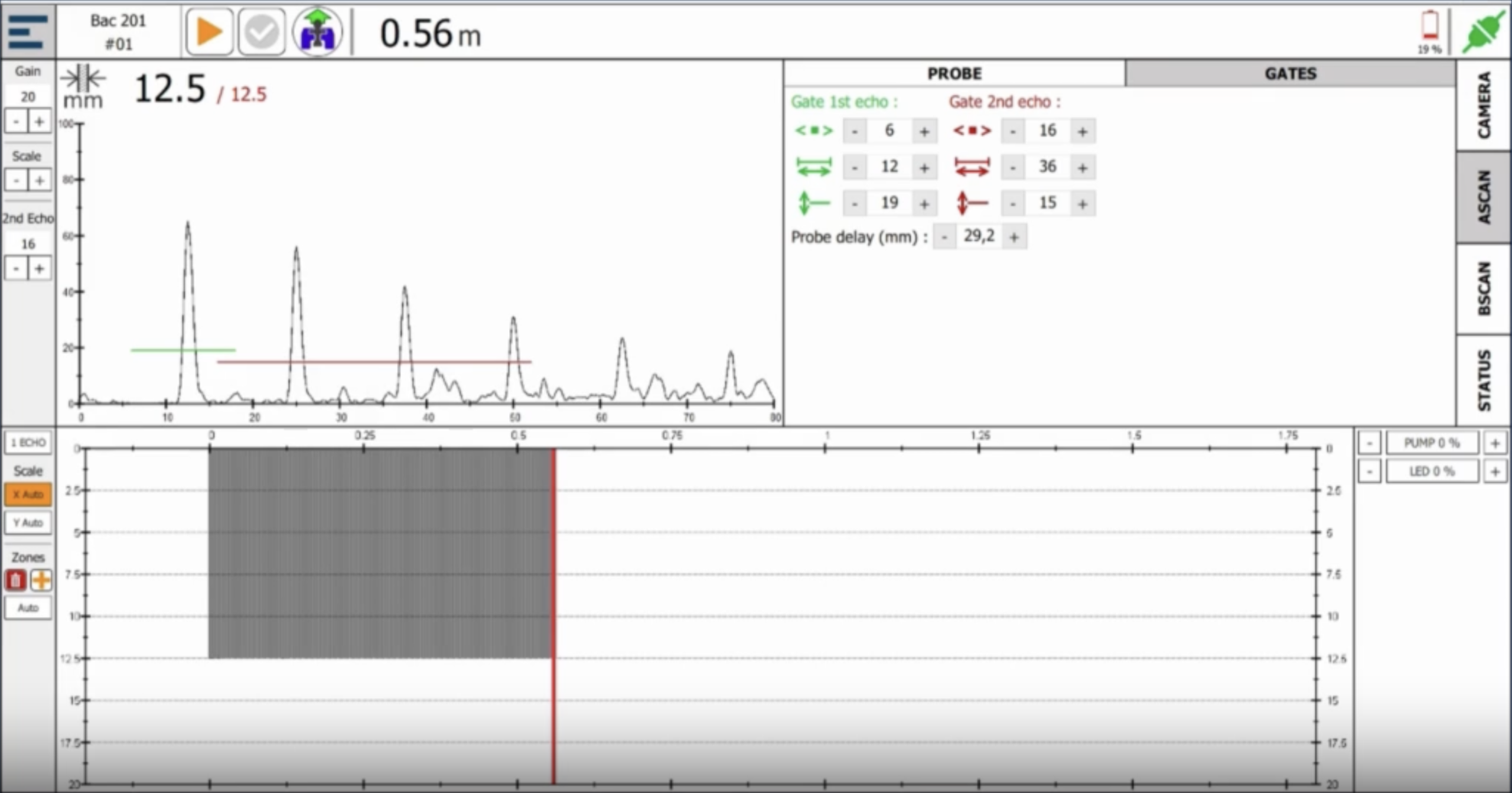
13 mm dual-element 5 MHz probe, direct acquisition on a rugged PC. Data integrity is guaranteed from the wall to the file.
A dedicated procedure for degraded areas.
Where thickness loss is confirmed, a fine-resolution map meets fitness-for-service assessment requirements under API 579-1 / ASME FFS-1.
Replay any reading without reopening the tank
UT_POLE records the entire A-scan signal, not just the thickness value it selected. Working on the original data back at the office, your inspectors can:
- move the gates and reinterpret a doubtful area;
- manually select the maximum where the automatic detection hesitated on a noisy surface;
- answer a challenge from the inspection body on the evidence itself, without going back to site;
- reuse the data years later to recalculate a corrosion rate.
Reopening a tank costs several times the campaign that measured it.
300 m of B-scan per day. Here is the calculation.
| Recording speed | 12 m/minute |
|---|---|
| Set-up | 10 minutes, out of the case |
| Crew | 2 people |
| Average output | 300 m of B-scan per day |
| For example | 30 vertical lines of 10 m |
| Which, across a tank farm, means | at least 3 tanks per day |
The number of tanks depends directly on their diameter and height: for the same linear metres, a 12 m tank is covered faster than a 16 m one. We publish the floor we hold in a standard configuration, including repositioning, calibration and moving around the structure. On favourable structures, daily output is regularly higher.
This is not an instantaneous speed extrapolated over eight hours. It is campaign output.
The geometries covered
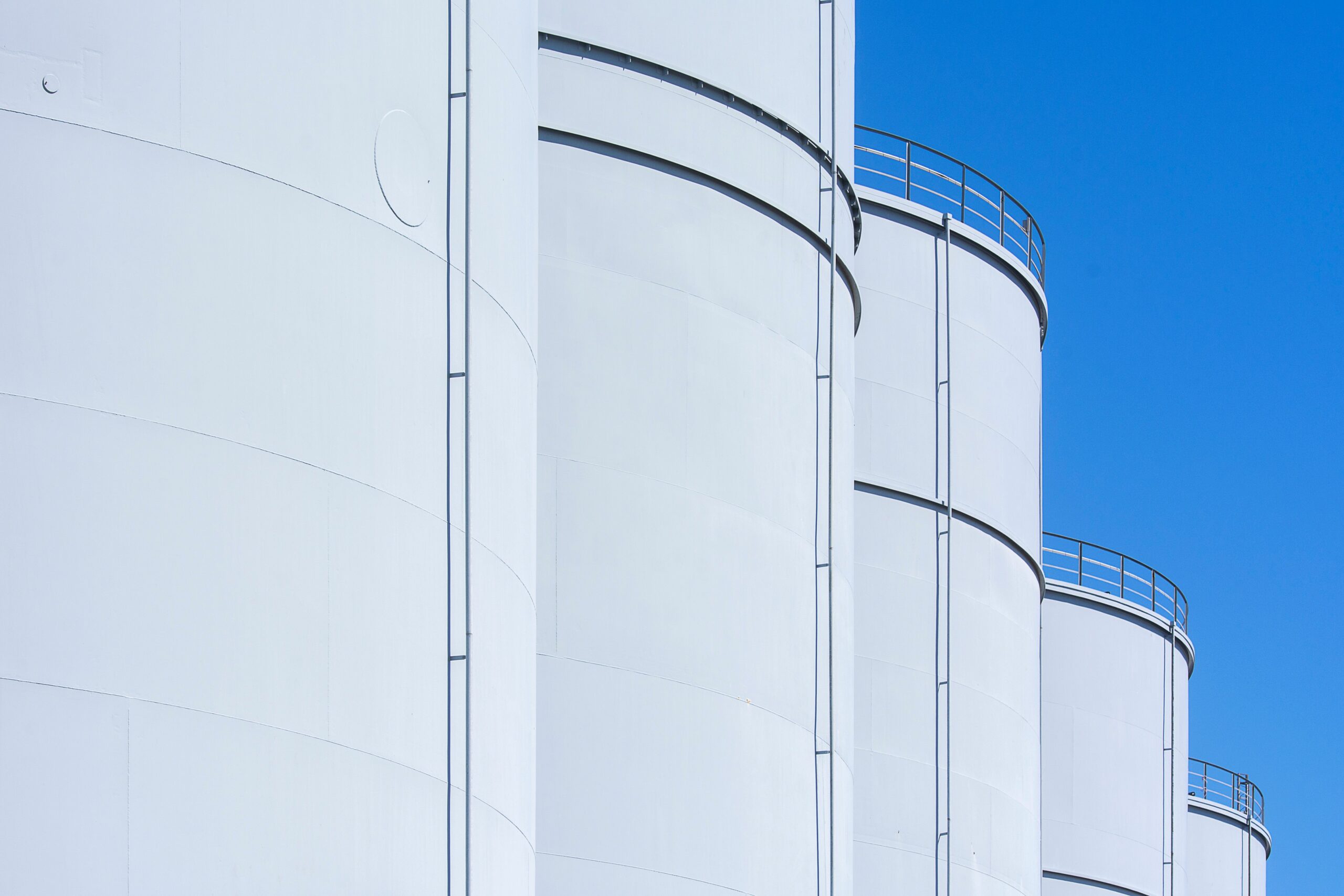
Stiffeners
Crossed, without interrupting the measurement line.
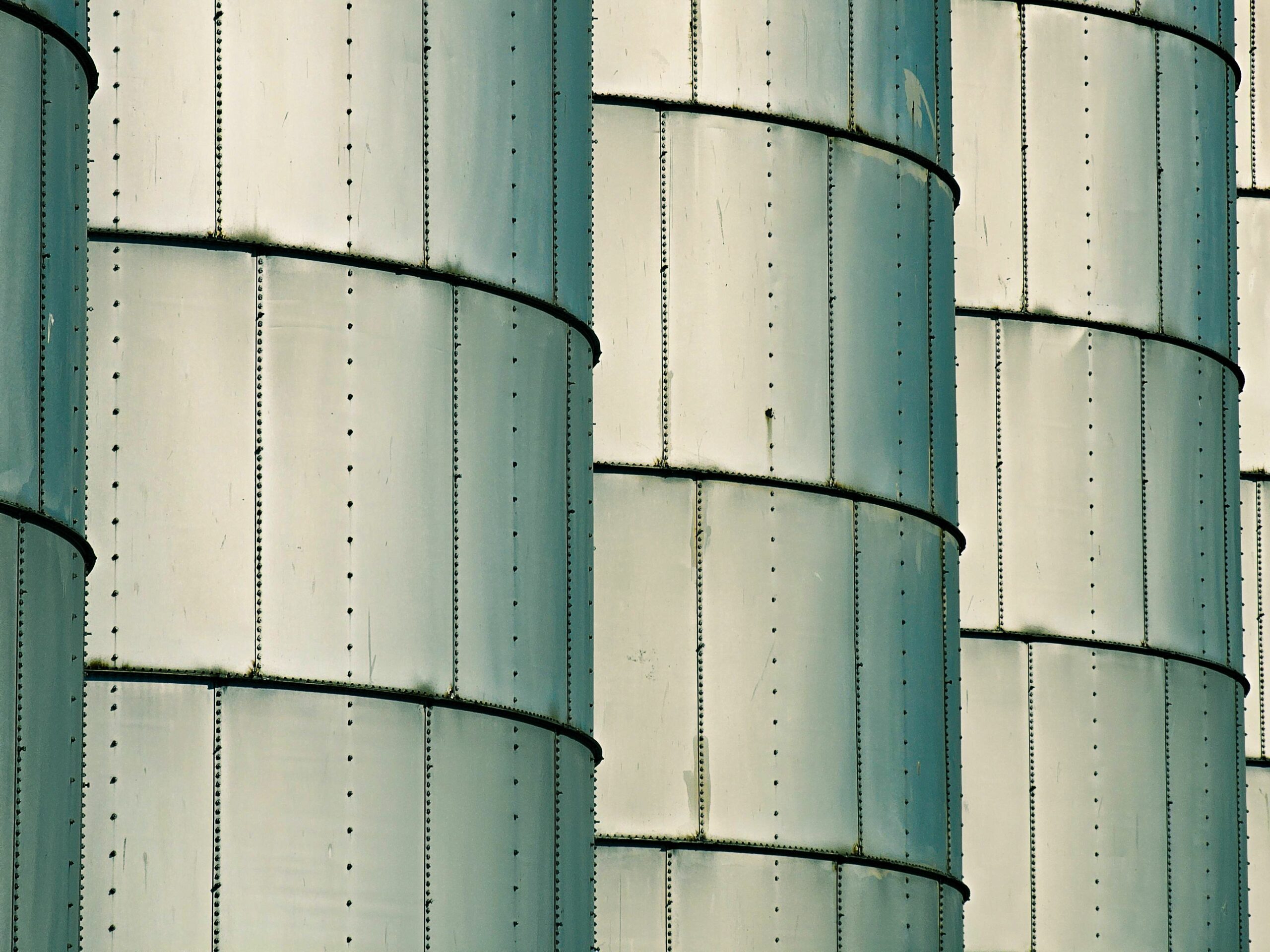
Riveted tanks
The plates are measured, including at the lap joints. The rivets themselves are not measured. These are often the oldest structures in a farm, and therefore the most closely monitored — API 653 addresses their case explicitly.
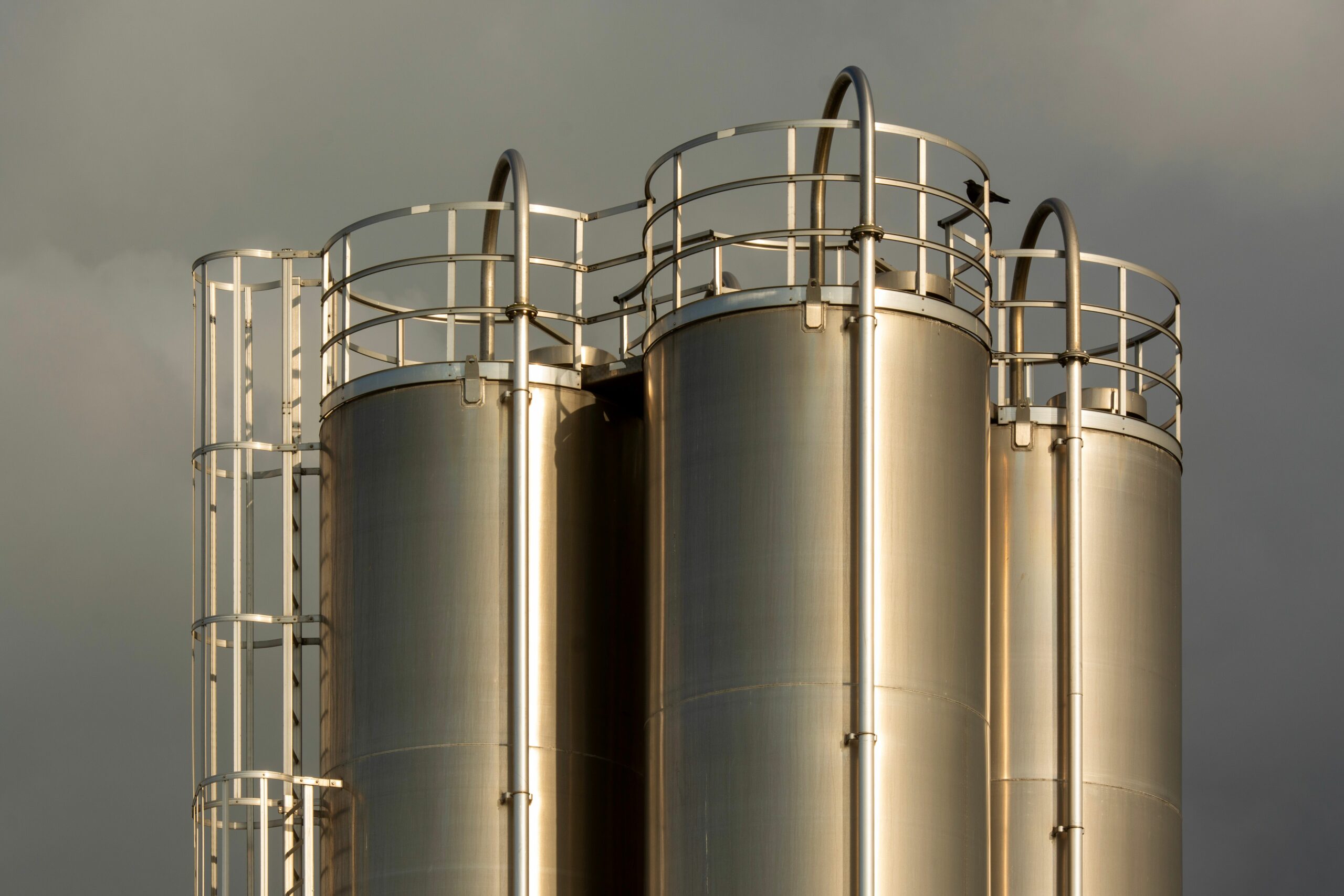
Stainless steel, all grades
As these steels are non-magnetic, the probe holder is not held by magnetic attraction: the operator stands off the wall and the weight of the scanner presses the holder against it. Encoded B-scan up to 12 m, spot readings up to 16 m.
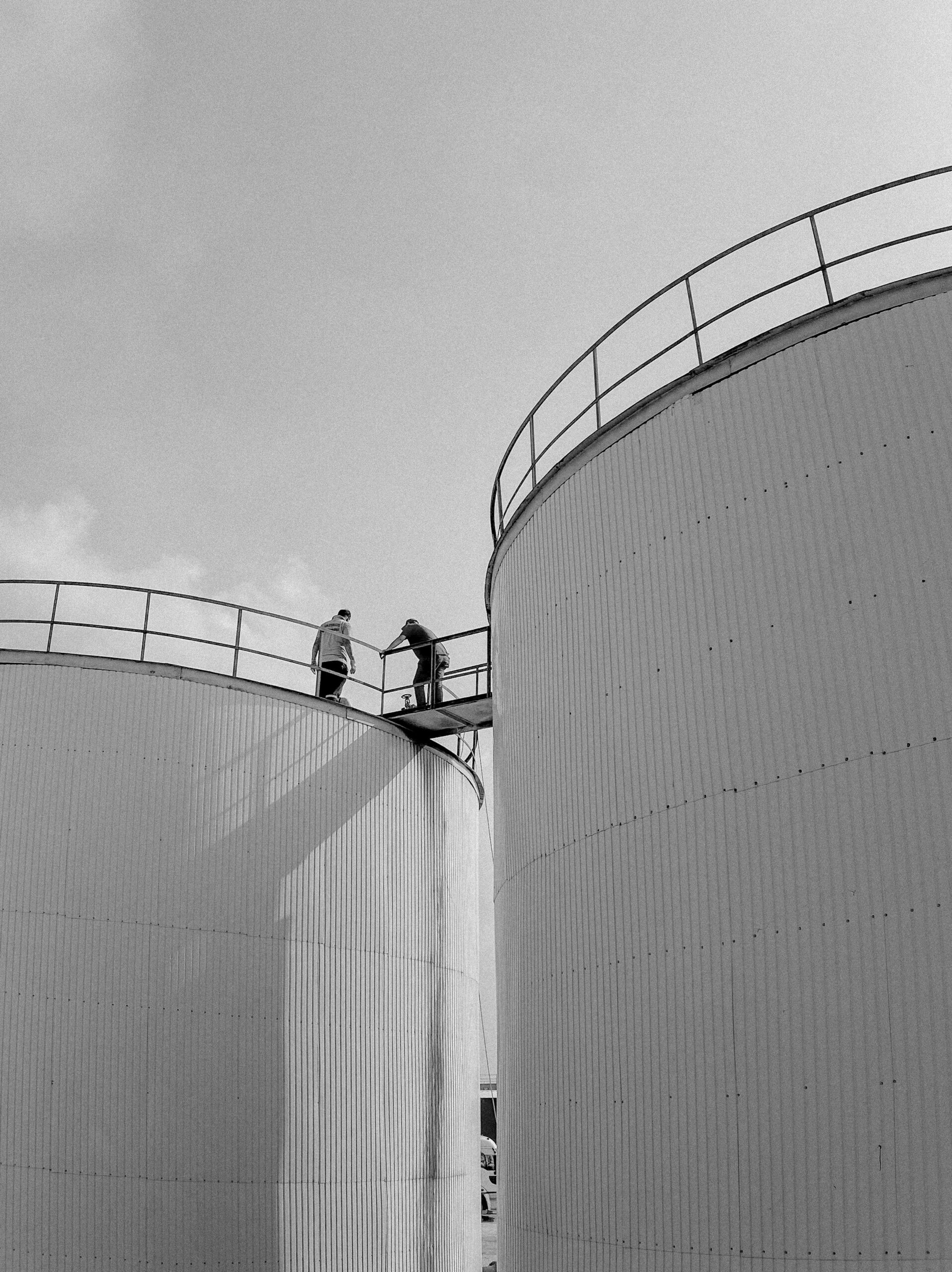
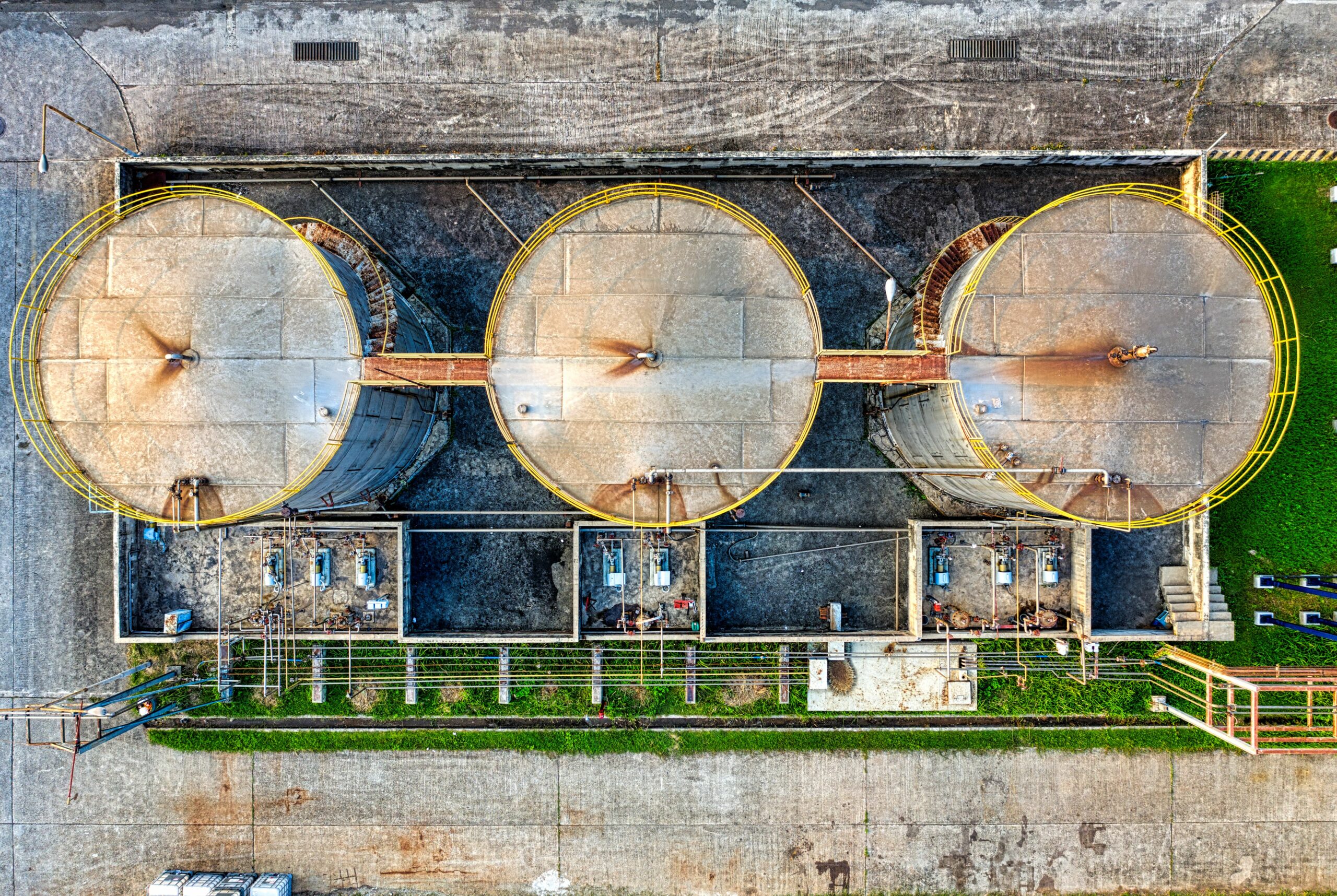
Inside insulated tanks
Measurement from the tank floor, with no access structure and without removing insulation.
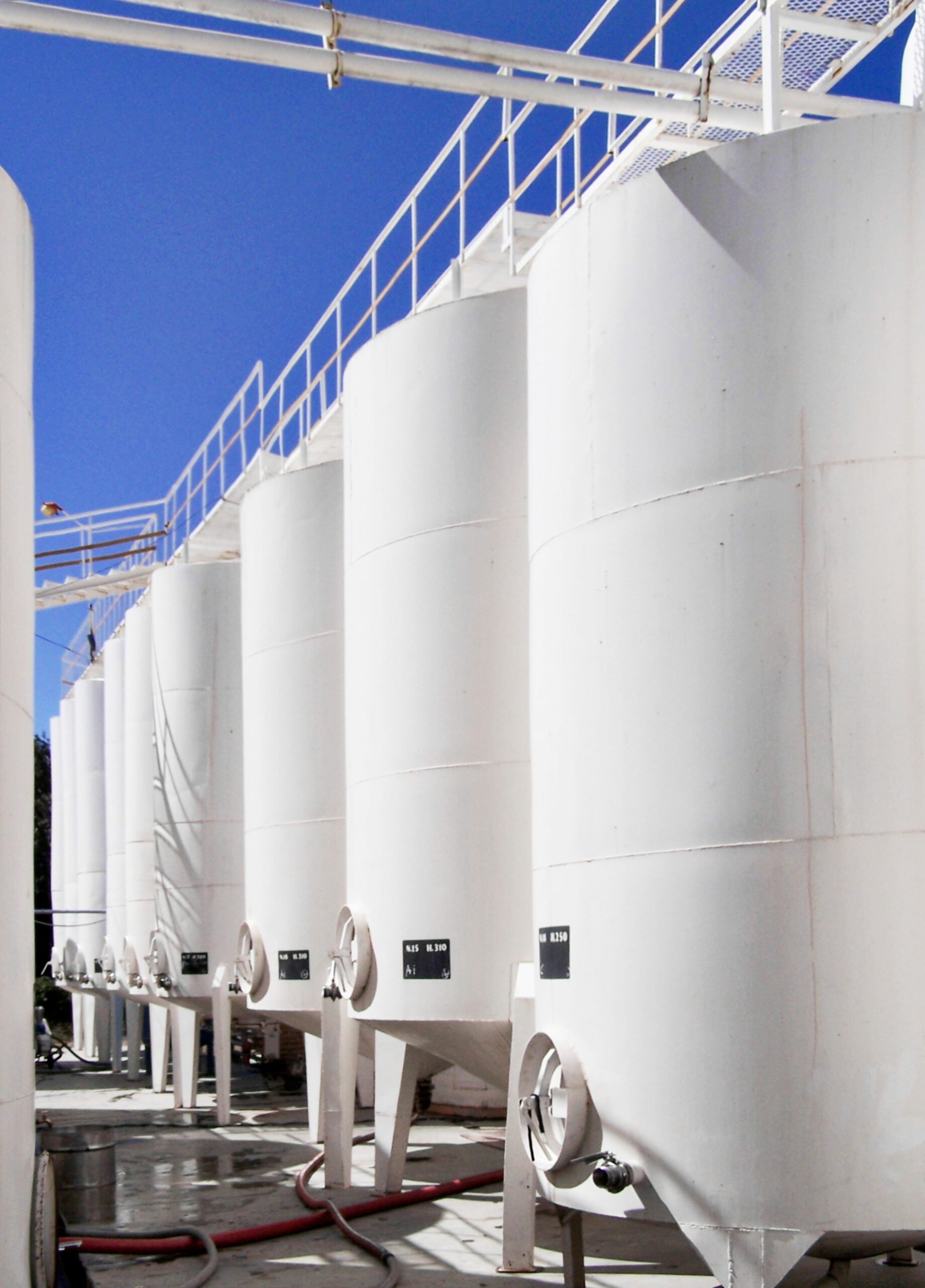
Roof plates
Measured from a high point, so remaining thickness is known before deciding whether to walk on them.
Small diameters
Any wall from Ø 400 mm longitudinally and Ø 1,000 mm circumferentially.
Data that stands up to the inspection body
- ISO 16831Compliant ultrasonic chain.
- API 653 · DT94 · CODRESCompliant reports for storage tanks.
- API 570Compliant reports for piping.
- API 579-1 / ASME FFS-1Fine-resolution mapping of degraded areas.
- Acquisition on a rugged PCData integrity, from the wall to the file.
- Raw A-scan signal preservedFull traceability and later re-analysis.
Hundreds of tanks inspected under these standards.
Datasheet
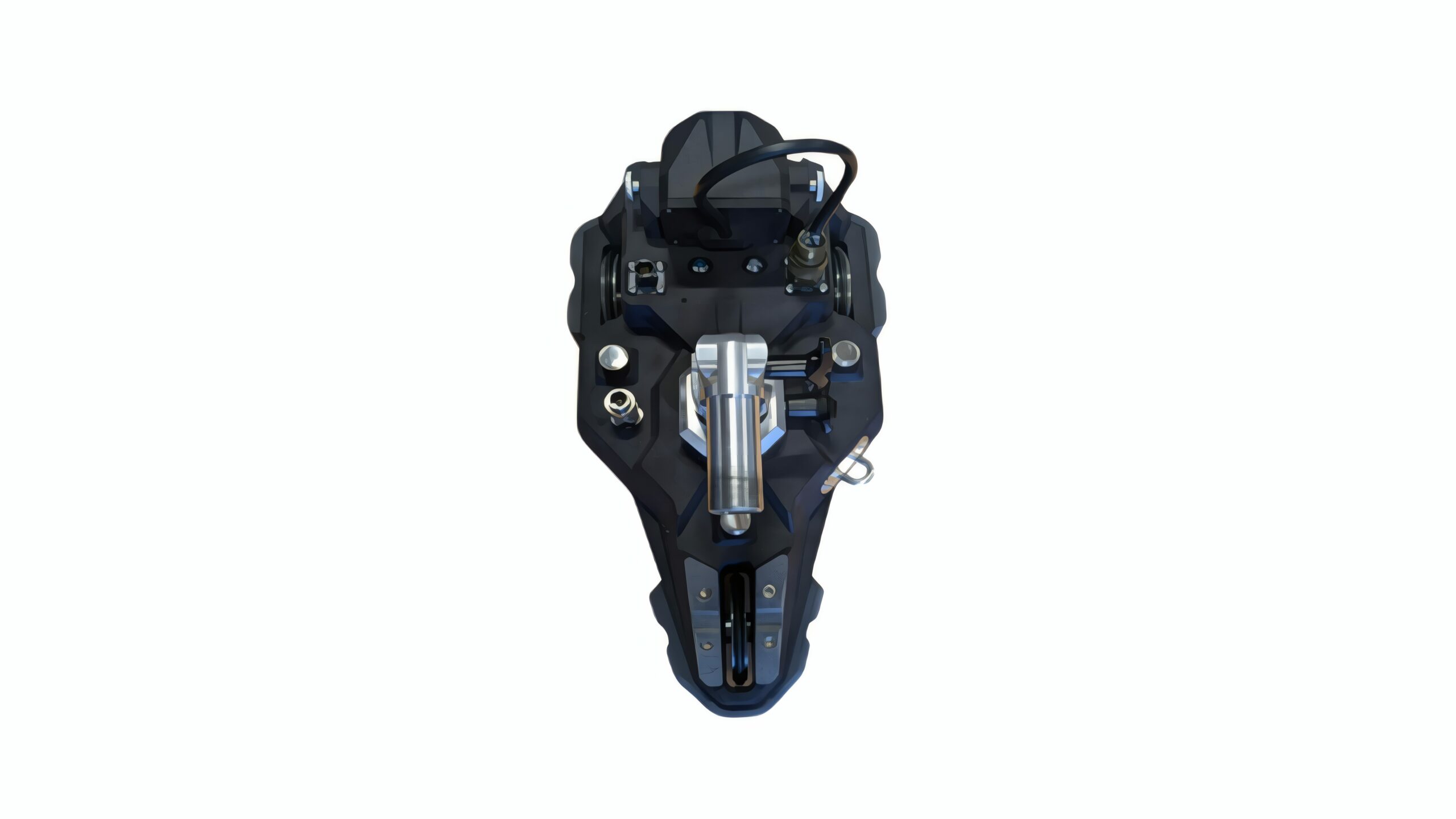
Reach, measurement, pole, coupling, link and transport: the full specifications of the equipment.
The detail, by theme
Reach
- Carbon steel, B-scan: 16 m
- From a high point: 30 m
- Stainless, all grades, spot: 16 m
- Stainless, all grades, B-scan: 12 m
Measurement
- 13 mm dual-element 5 MHz probe
- Simultaneous A-scan and B-scan
- Step adjustable down to 1 reading/mm
- Thickness 2 to 50 mm
- Accuracy ±0.15 mm
- Coating up to 1 mm
Pole and probe holder
- Carbon-Kevlar
- Mass 3.5 to 4.86 kg depending on configuration
- End-of-travel indicator
- Set-up 10 min
- Magnetic adhesion holding at 12.5 m/s
- IP54
Coupling and power
- Water coupling, +16 dB
- 16 L tank with adjustable flow
- 16 h pump, second battery
- PC: 3 swappable 2.5 h batteries
- No site utilities required
Link and transport
- 20 m umbilical: 2 coaxial cables, encoder, water
- Cut-resistant sheath
- Amphenol / Lemo, Lemo 1 / Lemo 0 adapter
- Cover and cases, air transport
All specifications
Reach
| Carbon steel, encoded B-scan | up to 16 m |
|---|---|
| Carbon steel, from a high point or a roof | up to 30 m |
| Stainless steel, all grades, spot readings | up to 16 m |
| Stainless steel, all grades, encoded B-scan | up to 12 m |
Measurement
| Probe | 13 mm dual element, 5 MHz |
|---|---|
| Modes | Simultaneous A-scan and B-scan |
| Encoder step | adjustable, down to 1 reading / mm |
| Raw signal | A-scan recorded in full, gates adjustable afterwards |
| Recording speed | 12 m/minute |
| Measurable thickness | 2 to 50 mm, echo-to-echo measurement |
| Coating | up to 1 mm |
| Accuracy | ±0.15 mm |
| Geometry | wall from Ø 400 mm longitudinal, Ø 1,000 mm circumferential |
| Head | steerable, vertical or circumferential measurement |
| Ultrasonic chain | compliant with ISO 16831 |
Pole and probe holder
| Material | carbon-Kevlar, designed to resist bending and abrasion |
|---|---|
| Modularity | sections and adapters can be removed to match mass to the height required |
| Mass | about 4.86 kg in high configuration, about 3.5 kg in 8 m configuration |
| Deployment safety | colour indicator showing the end of travel of each section |
| Set-up | 10 minutes |
| Probe hold | magnetic adhesion, 3-wheel stabilised probe holder |
| Wind resistance | 12.5 m/s, about 24 knots |
| Protection | IP54, works in heavy rain |
Coupling and power
| Coupling | water, +16 dB signal-to-noise ratio compared with a dry probe |
|---|---|
| Tank | 16 L, adjustable flow, battery-powered pump |
| Pump endurance | 16 h, second battery supplied |
| PC endurance | 3 batteries of 2.5 h, swappable in the field |
| Site utilities | no power supply or water mains connection. Water must be available on site. |
Link, environment and transport
| Umbilical | 20 m: 2 coaxial cables, encoder cable and water hose in a cut-resistant sheath |
|---|---|
| Connectors | Amphenol / Lemo, Lemo 1 / Lemo 0 adapter |
| UT digitiser | cable or WiFi link |
| Ambient temperature | 1 to 40 °C |
| Wall temperature | 0 to 100 °C |
| Transport | pole cover and cases, air transport |
Designed to be repaired far from us
There is little to repair. UT_POLE has no motorisation and no electronics driving it along the wall.
What can be repaired, you repair yourself. A critical spares kit is supplied with the unit, along with a maintenance manual and a video diagnosis before anything is shipped. The equipment is designed to be maintained by a non-specialist.
And behind you: spare parts in stock, worldwide intervention capability, a 2-year warranty on the whole unit, factory acceptance in Nantes or by video call before shipping, and e-learning training included for an unlimited number of people.
This is not a prototype
| More than 10 years | of poles in service |
|---|---|
| More than 50 units | in use, on every continent |
| TotalEnergies | behind the original development |
| Hundreds of tanks | inspected under API 653, DT94 and CODRES |
| 40 to 80 tanks a year | inspected by ROBOPLANET with its own poles |
We operate what we build. Every year ROBOPLANET inspects 40 to 80 storage tanks with the pole, plus ship hulls. Product developments come from the field.
An installed base on every continent
UT_POLE units in service — August 2026
An ergonomics study was carried out with the safety managers of major clients: workstation, risk of musculoskeletal disorders, resistance of the equipment to breakage and wear. Findings available on request.
Three versions
The pole and the probe holder, connected to your own thickness gauge. Spot readings. Compatibility to be confirmed before ordering.
The ACCESS version plus the encoder. B-scan becomes possible if your gauge accepts an encoder input.
The complete ROBOPLANET chain: dedicated UT electronics compliant with ISO 16831, encoder, analysis and reporting software, rugged acquisition PC.
Options
- VT_POLE visual payload
- Manual cleaning module
- 4-gas detection module
- Spare parts kit
Two ways to start
Rent
The equipment is available for rental: put it to work on a real campaign before tying up capital.
Technical day
A ROBOPLANET technician runs an inspection with your crew, on your site, under your conditions.
What we get asked in meetings
How high can UT_POLE measure?
Up to 16 m from the ground in encoded B-scan on carbon steel, and up to 30 m from a high point or a roof. On stainless steel, spot readings go up to 16 m and B-scan up to 12 m. We do not go beyond 16 m: past that, the risk of musculoskeletal disorders becomes major.
How many tanks can be inspected per day?
At least three, with two people, i.e. about 300 m of encoded B-scan. The exact number depends on the diameter and height of the structures; on favourable tanks, output is regularly higher.
Does UT_POLE work on stainless steel?
Yes, all grades. As these steels are non-magnetic, the hold is not magnetic: the operator stands off the wall and the weight of the scanner presses the probe holder against it. Spot readings up to 16 m, B-scan up to 12 m.
And on a riveted tank?
The plates are measured, including at the lap joints. The rivets themselves are not measured.
Does UT_POLE cross stiffeners?
Yes, without interrupting the measurement line.
What is the measurement resolution?
The encoder step is adjustable down to 1 reading per millimetre.
Can a reading be re-analysed after the campaign?
Yes. The raw A-scan signal is recorded in full. Gates can still be moved and the maximum selected manually, without returning to the asset or reopening the tank.
In what form are the results delivered?
Continuous B-scan profile, colour-coded map of the spot readings — green, amber, red — and an API 653 compliant thickness report with minimum, average and maximum per shell course.
Why water coupling rather than dry coupling?
Water coupling adds 16 dB of signal-to-noise ratio. On a degraded or coated shell course, that is often the difference between a usable reading and no reading at all.
Is a water connection needed on site?
No. The 16 L tank is self-contained, with a battery-powered pump and 16 h of endurance. It simply needs to be filled on site.
Is the report API 653 compliant?
Yes, and with the DT94 and CODRES recommendations: B-scan maps, weld positions, minimum, average and maximum thickness per shell course, position of the minimum, sizing of losses. A dedicated procedure covers fine-resolution mapping under API 579-1 / ASME FFS-1.
How long does the report take to produce?
The software cuts generation time by around 70% compared with manual formatting. The report can be produced before the crew leaves the tank.
Is UT_POLE certified for explosive atmospheres?
No. Deployment is carried out under permit with atmosphere monitoring; a 4-gas detection module allows an area to be monitored remotely.
Does UT_POLE work in rain and wind?
IP54, works in heavy rain. The magnetic adhesion holds up to 12.5 m/s of wind, about 24 knots.
How many people are needed?
Two.
Do you have to climb onto the roof to measure roof plates?
No. The measurement is taken from a high point, so thickness is known before deciding whether to walk on it.
Can it be used inside an insulated tank?
Yes, from the tank floor, with no access structure and without removing insulation.
How much weight does the operator carry?
About 4.86 kg in high configuration. Sections can be removed to come down to about 3.5 kg in 8 m configuration.
Can we use our own thickness gauge?
Yes, with the ACCESS or LITE version, via the Lemo 1 / Lemo 0 adapter. Compatibility must be confirmed before ordering.
Can we rent before buying?
Yes.
What happens if it fails far from France?
The unit is designed to be maintained by a non-specialist: on-board critical spares kit, manual, video diagnosis. There is no motorisation and no drive electronics. 2-year warranty, spare parts in stock, worldwide intervention capability.
Let's talk about your tank farm
Tell us about your structures; height, material, surface condition, applicable standard and our technical team will come back within 24 h with a suitable configuration.
- Reply within 24 working hoursYour enquiry is handled directly by our technical team.
- Configuration to suitACCESS, LITE or BSCAN, options included: you only take what you need.
- Purchase, rental or technical dayNot ready to invest yet? We also work on your site with our own crews.
